A battery rarely fails without warning. Its capacity often fades through thousands of small chemical changes, shaped by daily use. Understanding what affects battery lifespan helps explain why one phone battery still lasts through dinner, while another needs a charger by noon. The same principles matter for electric vehicles, laptops, and home energy storage. The details differ, but the underlying stresses often overlap.
Dr. Jeff Dahn, a prominent lithium-ion battery researcher, has studied how operating conditions influence battery aging. A careful, non-verbatim summary of his research is: “Temperature and charging voltage strongly influence how quickly lithium-ion batteries age.” That is not the whole story. Charging habits, depth of discharge, storage conditions, and workload can also matter. A hot car, a laptop running demanding software, or a device left fully charged for long periods can create different kinds of stress. Small choices add up.
This guide examines seven practical factors that can shorten or preserve battery life. It explains why heat is troublesome, how charge levels play a role, and what repeated deep discharges may mean over time. It also separates useful habits from battery-care myths. Some advice is not universal; device design and battery chemistry change the details. That part is easy to overlook. No routine can stop aging completely, and real-world use is messy. Still, noticing patterns—such as faster drain after a warm day—can help you make better decisions and set realistic expectations.
Battery chemistry sets the starting point for cycle life, but the test conditions matter just as much. Commonly published cell specifications place lithium iron phosphate (LFP) cells around 3,000–6,000 cycles, while nickel-rich NMC cells often fall near 1,000–2,000 cycles. These figures usually assume controlled temperatures and a defined remaining-capacity threshold, often 80%. Not apples to apples.
The U.S. Department of Energy’s 2022 Grid Energy Storage Technology Cost and Performance Assessment emphasizes that lifetime depends on operating conditions and system design, not chemistry alone. IRENA’s Electricity Storage and Renewables: Costs and Markets to 2030 likewise treats battery lifetime as a range rather than a fixed promise. A daily cycle that drains a cell from full to nearly empty can wear it faster than shallow cycling. Heat matters, too. A battery installed beside a hot garage wall may age differently from one kept in a cool, ventilated room. The cycle-count comparison is useful, but it can mislead: rated cycles are laboratory benchmarks, not a guarantee for a household’s real routine. That distinction deserves more attention.
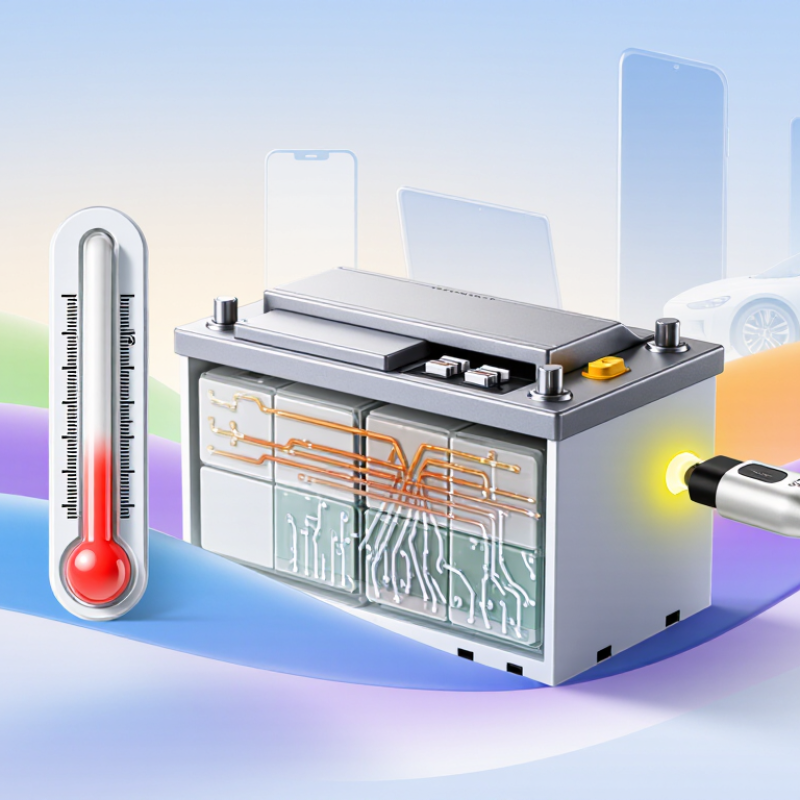
Heat can quietly shorten a lithium-ion battery’s useful life. A commonly cited rule of thumb says some aging reactions may occur roughly twice as fast with each 10°C temperature rise. It is not a universal formula: chemistry, charge level, battery design, and exposure time all matter. Still, repeated heat can accelerate capacity loss, even when the battery seems to work normally. The change may be gradual.
Think of a phone left on a sunny car seat or a power tool stored beside a warm heater. These small exposures add up, especially when a battery stays hot while fully charged. I used to think only dramatic overheating mattered; that was too simple. Ordinary warmth over many hours deserves attention, too. Cold conditions can reduce performance temporarily, but heat is generally more concerning for long-term aging.
Tips: Keep devices out of direct sun, and avoid charging them under blankets or in hot cars. If a battery feels unusually warm, pause demanding use and let it cool in a shaded, ventilated place. Store spare batteries somewhere cool and dry, following the device maker’s guidance. Don’t chase perfect conditions; focus on avoiding repeated, unnecessary heat.
A battery’s depth of discharge describes how much energy it uses before being recharged. Repeatedly draining a cell close to empty can add stress, especially when the device is warm or working hard. Smaller, shallower cycles are often gentler. A phone used from 70% down to 40%, then charged, has not completed a full discharge cycle; partial use still counts toward cumulative wear, but it does not automatically equal one full cycle. Small habits matter.
Charge level matters, too. Many lithium-ion batteries experience more stress when held near empty or full for long periods. When convenient, keeping a device roughly between 20% and 80% can help reduce that stress. Treat this as a flexible range, not a rule: battery chemistry, device settings, and daily needs vary. I used to chase an exact percentage, but constant checking was more trouble than it was worth. That may not suit everyone.
Tips: Turn on an available charge limit, and avoid leaving a hot device plugged in under blankets or in direct sun. Charge before the battery reaches zero when practical. If you need a full charge for travel or a long day, use one without guilt; occasional 100% charging is not a disaster. Be realistic.
Fast charging saves time, but it pushes more current through battery cells in less time. Some of that energy becomes heat. A warm battery after a rapid session is normal; repeated charging while the pack is already hot is harder on it. Heat is the catch. NREL’s battery-life modeling work identifies temperature and charging conditions as important factors in lithium-ion battery aging. The IEA reported that public fast-charging points grew by 55% worldwide in 2023, making this trade-off increasingly relevant (Global EV Outlook 2024).
The effect depends on cell design, cooling, starting temperature, and charge level. A car charging outdoors on a mild evening may handle the same charging rate better than one arriving hot after a long drive. Battery-management systems can reduce charging power when temperatures rise, which protects cells but may lengthen the stop. That is useful, though not always convenient. When time allows, slower charging can reduce thermal load, especially in hot weather or after sustained driving. Avoid treating every fast charge as harmful: occasional use is a practical compromise. I would still watch for repeated high-temperature charging habits, because a single dashboard temperature reading cannot reveal the full history of cell stress.
Faster charging can increase heat generated inside battery cells. This chart shows estimated resistive heat-generation power relative to 1C, using the relationship P = I²R and assuming constant cell resistance.
Values are a simplified comparison, not battery-life test results. Actual cell temperature and aging depend on battery chemistry, state of charge, cooling, and charging conditions. Sustained high temperatures can accelerate battery aging.
Calendar aging wears a battery even when an electric vehicle is parked. Heat and long periods at a very high charge can accelerate capacity loss. In its 2024 Battery Degradation report, Geotab analyzed data from more than 10,000 vehicles and estimated average degradation at 1.8% per year. That is a fleet average, not a prediction for every car. A vehicle left in a hot driveway may age differently from one parked in a shaded garage.
Many U.S. electric-vehicle warranties cover the battery for eight years or 100,000 miles, whichever comes first. The U.S. Department of Energy’s Alternative Fuels Data Center describes this as a federal minimum. Coverage details still matter: warranties may specify a minimum remaining capacity, and terms can vary. The number of years alone does not tell you exactly what repair or replacement qualifies.
Storage habits can help limit avoidable stress. For a few weeks away, check the owner’s manual rather than leaving the battery full in summer heat. A moderate charge level and a cooler parking spot are sensible choices. Small caveat: “moderate” is not one universal number, and battery-management systems differ. I would treat warranty coverage as a safety net, not a storage plan.
| Factor | How It Affects the Battery | Practical Guidance |
|---|---|---|
| 1. Temperature | High temperatures can accelerate chemical aging, while very cold conditions temporarily reduce power and driving range. Repeated heat exposure is particularly undesirable. | When practical, park in shade or a temperature-controlled garage. Use the vehicle’s battery preconditioning features when available. |
| 2. Storage and calendar aging | Batteries age with time even when the vehicle is not driven. Long storage at a very high or very low state of charge can add stress. | For extended storage, follow the vehicle manual; many manufacturers advise leaving the battery around 30–50% charged and checking it periodically. |
| 3. Time spent at a high state of charge | Keeping a battery near full charge for long periods can increase aging, especially in warm conditions. A full charge is still appropriate when needed for a trip. | Set a routine charging limit suited to daily driving, then charge higher shortly before longer journeys if the vehicle’s instructions allow. |
| 4. Depth and frequency of charge cycles | Repeatedly using a large portion of the battery’s capacity can contribute to wear. The effect depends on battery chemistry, temperature, and vehicle controls. | When convenient, avoid routinely running the battery very low. Normal daily use does not require keeping the charge within a rigid range. |
| 5. Charging power and heat | Frequent high-power DC fast charging can generate more heat than slower charging. Battery cooling and charging controls can reduce, but do not eliminate, the effect. | Use fast charging when it is useful for travel; slower home or workplace charging is often suitable for regular charging. |
| 6. Driving and energy demand | High-speed driving, rapid acceleration, heavy loads, and steep climbs increase energy use and can raise battery temperature. They mainly affect range per trip, though frequent demanding use may increase cycling and heat exposure. | Use smooth acceleration and moderate speeds when practical. Allow the vehicle’s thermal-management system to operate as designed. |
| 7. Battery design and thermal management | Cell chemistry, pack design, cooling or heating systems, and battery-control software influence how well a pack handles temperature and charging stress. | Follow the vehicle’s maintenance and software guidance. Battery behavior and recommended charging practices can differ by model and chemistry. |
Warranty context: Many U.S. EV battery warranties are stated as 8 years or 100,000 miles, whichever comes first, but coverage, exclusions, capacity-retention thresholds, and state-specific requirements vary. Check the warranty document for the vehicle.
Fast charging sends more current through battery cells in less time. Some energy becomes heat. Heat is the catch.
Some warmth is normal. Repeated fast charging while the battery is already hot can add stress, especially after a long drive.
Cell design, cooling, starting temperature, and charge level all matter. A mild evening can be easier on the battery than a hot afternoon.
Yes. Battery controls may lower charging power as temperatures rise, helping protect cells but extending the stop. Not always convenient.
When time allows, slower charging may reduce heat, especially in hot weather or after sustained driving. Occasional fast charging is a practical compromise.
Yes. Calendar aging happens even when a vehicle is unused. Heat and long periods at a very high charge can speed capacity loss.
One fleet study estimated average degradation at 1.8% per year across more than 10,000 vehicles. That is an average, not a promise for one car.
Many warranties cover eight years or 100,000 miles, whichever comes first. Coverage terms and minimum capacity requirements can vary. Check the fine print.
Check the owner’s manual. A moderate charge level and a cooler parking spot are sensible choices. “Moderate” has no single universal number, though. I might be oversimplifying.
Understanding what affects battery lifespan can help people use and maintain batteries more effectively. Battery chemistry sets a baseline for durability, while cycle count reflects how often a battery is charged and discharged. Different cell types have different rated cycle lives, so lifespan depends partly on the battery’s design. Temperature also matters: prolonged heat accelerates aging, and a 10°C rise can roughly double lithium-ion aging rates. Keeping a battery away from excessive heat can therefore help preserve its capacity.
Usage and storage habits also influence long-term performance. Shallower discharge-and-charge cycles generally place less stress on cells than repeatedly draining them deeply, while fast charging can add heat and increase thermal load. Even when a battery is not in use, calendar aging continues, making storage conditions and charge level important. For electric vehicles, many U.S. warranties provide coverage for eight years or 100,000 miles, though terms vary. Together, these factors shape how well a battery retains capacity over time.
PowerSTN Energy