Energy storage is moving from a supporting technology to a core part of modern power systems. But what is energy storage? It captures electricity or heat for use later, helping balance supply when solar and wind output changes. In battery energy storage systems, the familiar white container may hold battery racks, cooling equipment, fire detection, and power conversion hardware.
The International Energy Agency’s Batteries and Secure Energy Transitions report notes that battery storage deployment must expand substantially this decade to support clean-energy goals. Its Global Energy Review 2024 reports that battery storage capacity additions reached about 42 GW in 2023, more than twice the previous year. The figures describe a fast-changing market, not a guarantee that every project will perform equally well. A container is only the visible part.
China is central to this supply chain, with companies serving different roles: cell manufacturing, system integration, power conversion, and project delivery. This guide examines 10 notable China ESS suppliers through practical lenses, including product range, manufacturing scale, safety approach, and international project experience. “Top” can mean revenue, shipments, installed capacity, or technical capability; rankings therefore vary by source and year. That ambiguity deserves attention. Buyers should verify current product specifications, warranties, service coverage, and independently reported project records rather than relying on a list alone. Industry data can help frame the comparison, but it cannot replace project-specific due diligence.
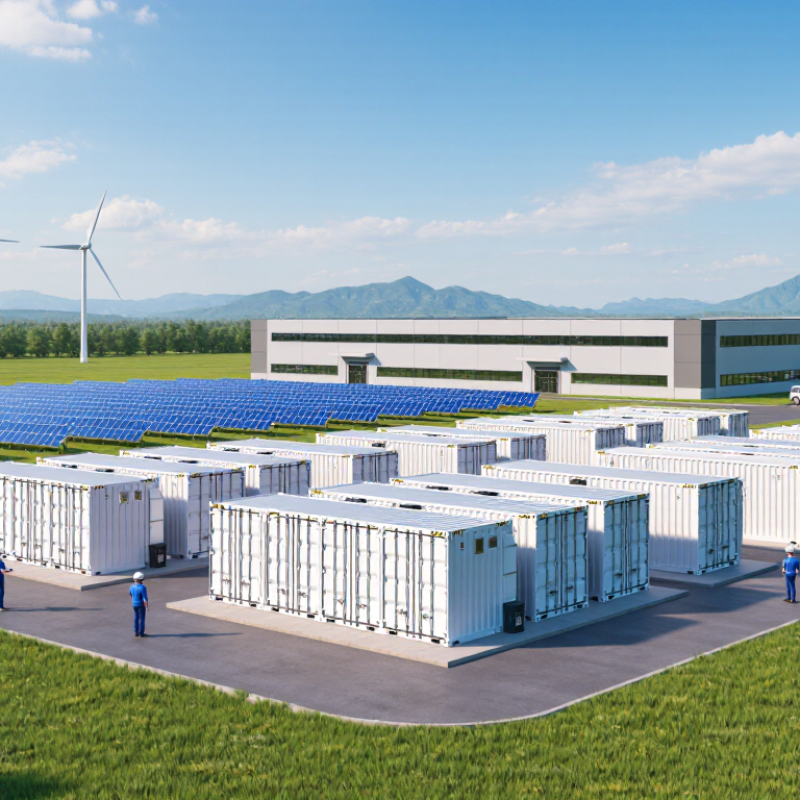
An energy storage system stores electricity for use when generation is low or demand rises. A typical system includes battery modules, a battery management system, an inverter, cooling equipment, and safety controls. The battery holds energy chemically. The inverter converts electricity between the battery’s direct current and the alternating current used by many buildings and grids.
During charging, a controller directs available electricity into the battery and monitors voltage, temperature, and charge levels. When power is needed, the inverter sends electricity to connected equipment or the grid. For example, a solar-equipped warehouse might charge its batteries around midday, then use stored power after sunset. The system’s controls help balance supply and demand. They do not create energy.
A neat diagram hides messy details. Installation conditions matter: ventilation, cable layout, operating temperature, and the building’s load profile can affect performance. Battery software also limits charging and discharging to protect cells, so the full rated capacity may not always be available. Operators should review performance data and maintenance requirements rather than relying on a single capacity figure. There is no universal setup; the right design depends on how and where the system will operate.
This table compares ten established energy-storage technologies and system types. It does not rank or identify suppliers. Performance figures are indicative ranges; actual results depend on system design, operating conditions, and measurement boundaries.
| Energy Storage Technology | How It Works | Typical Discharge Duration | Indicative Round-Trip Efficiency | Common Applications |
|---|---|---|---|---|
| Lithium Iron Phosphate (LFP) Batteries | Electrical energy is stored and released through reversible lithium-ion movement between electrodes. | About 1–8 hours | About 85–95% | Grid-scale storage, renewable-energy shifting, commercial backup, and peak shaving |
| Nickel Manganese Cobalt (NMC) Batteries | Lithium ions move between a layered-oxide cathode and a graphite-based anode during charging and discharging. | About 1–4 hours | About 85–95% | Electric vehicles, compact stationary systems, and applications where energy density is important |
| Vanadium Redox Flow Batteries | Energy is stored in liquid electrolytes held in tanks and converted through electrochemical reactions in a cell stack. | About 4–12 hours or longer | About 65–85% | Long-duration grid storage and renewable-energy integration |
| Sodium-Ion Batteries | Sodium ions move between electrodes during charge and discharge; the technology uses sodium-based electrochemistry rather than lithium-based chemistry. | Often designed for a few hours; system-dependent | Indicative system estimates are commonly about 80–90% | Stationary storage and other applications where material availability and cost are important considerations |
| Lead-Acid Batteries | Electrical energy is stored through reversible reactions between lead-based electrodes and a sulfuric-acid electrolyte. | About 0.5–4 hours | About 70–85% | Backup power, telecommunications, and lower-cost short-duration storage |
| Pumped-Storage Hydropower | Electricity pumps water to an upper reservoir; water is later released through turbines to generate electricity. | Several hours to more than a day, depending on reservoir capacity | About 70–85% | Bulk grid storage, load balancing, and long-duration power-system support |
| Compressed-Air Energy Storage (CAES) | Electricity compresses air for storage in a suitable reservoir; the air is later expanded through machinery to produce power. | Several hours to multiple days, depending on system design | About 40–70% for conventional systems; design-dependent | Large-scale, long-duration grid storage and energy shifting |
| Thermal Energy Storage | Energy is stored as heat or cold in materials such as water, molten salts, or phase-change materials, then used directly or converted to power. | Hours to days, depending on the medium and application | Not directly comparable across systems; depends on whether useful heat, cooling, or electricity is the output | Building heating and cooling, industrial processes, and solar thermal power plants |
| Hydrogen Energy Storage | Electricity powers electrolysis to produce hydrogen, which can be stored and later used in a fuel cell, turbine, or industrial process. | Hours to seasonal storage, subject to storage capacity | About 25–45% for electricity-to-hydrogen-to-electricity pathways | Long-duration or seasonal storage, industrial feedstock, and energy-sector integration |
| Flywheel Energy Storage | Electricity accelerates a rotating mass; stored kinetic energy is converted back to electricity when the rotor slows. | Seconds to minutes; some systems can provide longer short-duration output | About 85–95% | Frequency regulation, power quality, and rapid-response backup |
Efficiency ranges are broad reference values, not guaranteed project specifications. Comparisons may differ according to auxiliary loads, conversion equipment, operating temperature, and whether results are measured at cell, equipment, or full-system level.
It stores electricity when supply is available and releases it when generation falls or demand rises. It helps balance supply. It does not create energy.
Common parts include battery modules, a battery management system, an inverter, cooling equipment, and safety controls. The battery stores energy chemically. The inverter converts electricity between direct and alternating current.
During charging, a controller directs electricity into the battery and monitors voltage, temperature, and charge levels. When power is needed, the inverter sends electricity to connected equipment or the grid. For example, a warehouse may charge at midday and use stored power after sunset.
No. Battery software limits charging and discharging to protect the cells. Temperature and operating conditions can also matter. One capacity figure may not tell the whole story.
Ventilation, cable layout, operating temperature, and the building’s load profile can all affect operation. A neat diagram hides these details. They deserve a closer look.
No. Match the system to its job. A solar farm may need dependable multi-hour discharge, while a factory may value fast control and frequent cycling. Remote microgrids need stable operation without grid support.
Ask for round-trip efficiency measured at the AC connection, including cooling and other auxiliary loads. A published modeling benchmark uses 85% for utility-scale battery efficiency. It is not a guarantee for every project.
Request usable energy at the stated temperature, response time, degradation assumptions, warranty throughput, and comparable operating records. Ask about downtime and capacity testing. Cycle-life figures can be hard to compare when test conditions differ. Hot, dusty sites may tell a different story.
This article explains what is energy storage and how energy storage systems capture electricity, store it for later use, and help balance supply and demand. It outlines the main technologies and components found in these systems, including battery types, power conversion equipment, control software, thermal management, and safety features. It also describes how China’s energy storage supplier market is organized, from component makers and system integrators to providers of complete solutions.
The article surveys ten major Chinese suppliers without focusing on brand promotion, highlighting the range of capabilities found across the market. It concludes with a practical framework for comparing suppliers according to an application’s requirements, such as capacity, response time, operating conditions, system integration, service support, and long-term reliability. These considerations can help project developers and buyers identify solutions suited to renewable energy, grid support, commercial facilities, or other storage needs.

 PowerSTN Energy