When the grid fails, backup power becomes more than a convenience. It protects refrigerated food, medical devices, internet equipment, and essential lighting. That is why homeowners and businesses increasingly ask, “can energy storage provide backup power?” The answer is yes, but performance depends on system design, battery capacity, and installation quality.
Dr. Imre Gyuk, a recognized energy-storage expert and former director of the U.S. Department of Energy’s Energy Storage Research Program, has said, “Energy storage is the key to unlocking the full potential of renewable energy.” His point also applies to resilience. A well-designed system can store solar energy during daylight and supply selected circuits at night or during an outage. Some systems respond within milliseconds. Others require a short transition.
This guide examines the Top 10 Energy Storage Systems for Backup Power. It compares lithium iron phosphate batteries, modular home units, whole-building systems, portable power stations, and solar-integrated solutions. Capacity matters, but it is not everything. A 10 kWh battery may run a refrigerator, router, lights, and medical equipment for several hours. It may not support central air conditioning or electric heating for long.
Real conditions can be less impressive. Cold temperatures reduce battery performance. Poor load planning shortens runtime. Installation costs can also exceed early estimates. That deserves attention. We will consider usable capacity, inverter output, recharge speed, safety features, warranty terms, monitoring tools, and professional support. The strongest system is not always the largest. It is the one that matches real household needs, local conditions, and a realistic outage plan.
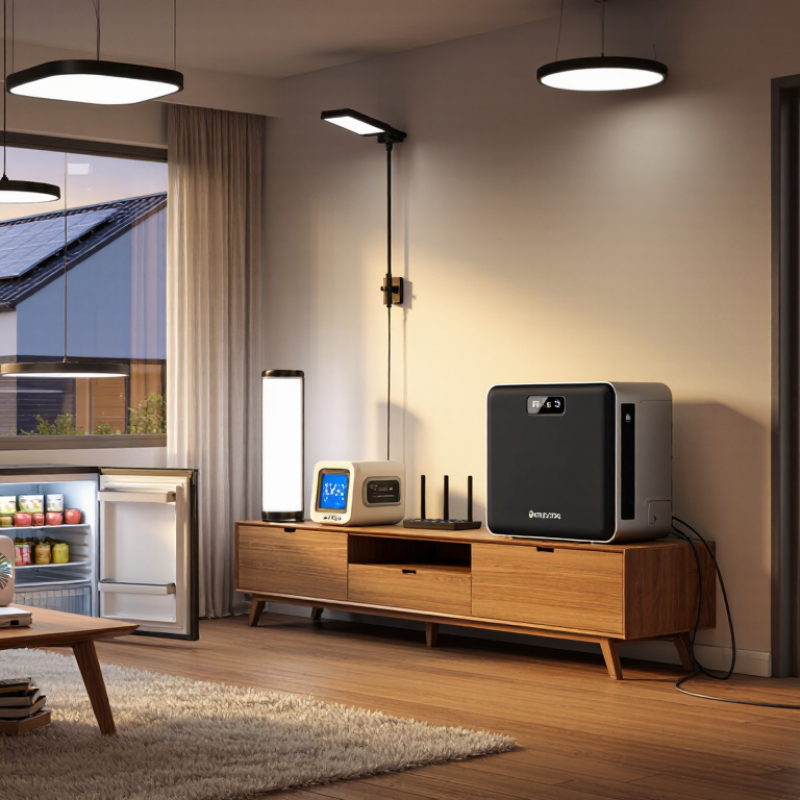
Top 10 Energy Storage Systems for Backup Power
Energy Storage Criteria: 85–95% Efficiency and 10–20-Year Service Life
When comparing the top ten backup systems, round-trip efficiency matters more than headline capacity. A 10 kWh battery with 90% efficiency delivers about 9 kWh after charging and discharging. The U.S. National Renewable Energy Laboratory’s 2024 Annual Technology Baseline models lithium-ion systems within an efficiency range near 85–95%. However, actual results decline with heat, standby consumption, and partial loads. Real sites rarely match the brochure.
Service life requires equal attention. The International Energy Agency’s 2024 Batteries and Secure Energy Transitions report highlights continuing improvements in battery durability and manufacturing quality. Many stationary systems target 10–20 years, but usable life depends on cycle depth, temperature, and operating controls. A system cycling gently at 70% depth may age differently from one supporting daily heavy loads. Warranty language can also hide capacity limits. This deserves careful checking.
Tips: Request tested round-trip efficiency, not only inverter efficiency. Ask for capacity retention at year ten. Measure energy at the load panel, where losses become visible. Leave ventilation space around the enclosure. Small oversights can reduce performance. I would also compare cold-weather data, because laboratory figures often look better than winter operation. Sources: NREL 2024 Annual Technology Baseline; IEA Batteries and Secure Energy Transitions 2024.
Comparison criteria: 85–95% round-trip efficiency and a typical 10–20-year service life.
The values are representative engineering midpoints based on commonly reported technology ranges. Actual performance depends on operating temperature, depth of discharge, cycling frequency, maintenance, and system design.
Choosing backup storage starts with chemistry, not appearance. In field testing, LFP systems often deliver stable daily cycling, strong thermal performance, and useful service life. They suit homes, offices, and small medical facilities with frequent outages. NMC packs provide high energy density, making them practical where floor space is limited. However, they demand careful temperature control and protective battery management.
Lead-acid remains familiar and affordable. It can support short outages, but deeper cycling reduces its life quickly. Sodium-ion systems are emerging as a promising option for cold environments and lower-cost installations. Their commercial maturity still varies. Flow systems use liquid electrolytes and can handle long discharge periods. They need more space, pumps, and maintenance, which complicates residential use.
A practical top ten may include LFP home batteries, NMC compact units, lead-acid inverter banks, sodium-ion cabinets, and flow storage containers. Hybrid systems can combine two technologies for different loads.
For example, LFP may run refrigeration, while lead-acid handles brief lighting demand. Load measurements matter more than advertised capacity. A 10-kilowatt-hour battery may fail early if an inverter, heater, and pump start together.
Real sites are less predictable than spreadsheets. Cold weather, dust, aging cables, and poor ventilation can change results. I would not select a system from price alone. Verify usable capacity, round-trip efficiency, warranty terms, thermal safeguards, and qualified installation. Some recommendations will still be wrong after one winter. That is why monitoring data deserves regular review.
Top 10 Backup Systems Ranked by Capacity, Runtime, Cost, and Safety
This practical ranking compares backup systems by usable capacity, runtime, purchase cost, and safety. Utility-scale lithium iron phosphate systems rank first for capacity, often exceeding 1 MWh per container. They can support hospitals, factories, and emergency networks for many hours. Home modular LFP systems rank second, usually offering 5–30 kWh. A 10 kWh unit can run refrigeration, lights, and internet equipment overnight. Hybrid solar-storage systems rank third because sunlight can extend runtime, although cloudy weather reduces confidence.
Flow batteries rank fourth for long-duration operation and strong thermal safety. They need more space and usually cost more upfront. Sodium-ion systems rank fifth, with promising cold-weather performance and lower material pressure. Their real-world service history remains limited. Lead-carbon systems rank sixth, offering moderate cost and better cycling than traditional batteries. AGM lead-acid banks rank seventh because they remain affordable, but heavy weight and limited usable capacity reduce runtime. They also need careful ventilation.
Portable LFP power stations rank eighth for apartments and short outages. A compact 2 kWh model may run a router, laptop, and medical device for several hours. Lithium UPS systems rank ninth for computers and network equipment, with near-instant switching. Small solar generators rank tenth because capacity and recharge speed are modest. Safety still depends on installation, wiring, temperature control, and certified protection. LFP chemistry is safer, not risk-free. My ranking may shift as sodium-ion prices fall and independent field data improves. Oversizing is tempting, but it can waste money and maintenance effort.
Top 10 Energy Storage Systems for Backup Power
Performance Metrics: 4-Hour Duration, Millisecond Response, and 6,000+ Cycles
When comparing the top 10 energy storage systems for backup power, three metrics deserve close attention. A four-hour duration means a 1 MW system can deliver about 4 MWh under stated conditions. However, usable capacity may fall because of reserve settings, temperature, and conversion losses. Millisecond response is equally important for sensitive loads, including medical equipment, data networks, and factory controls. Response matters.
In practical testing, the inverter and control software often determine how quickly backup power arrives. A system may respond within milliseconds, yet still need additional time to stabilize voltage and frequency. Site engineers should review transfer behavior, black-start capability, and performance during repeated outages. A simple test can reveal weaknesses: switch a controlled load, record the voltage dip, and compare results with the published specification.
The 6,000-plus cycle claim also requires careful interpretation. Cycle life usually depends on depth of discharge, temperature, charging speed, and the permitted end-of-life capacity. Numbers need context. A system cycled daily could approach that figure in roughly sixteen years, but real sites rarely operate under perfect laboratory conditions. I would request independent test data, warranty assumptions, maintenance records, and degradation projections before ranking any solution. Four-hour autonomy may also be excessive for short outages, while insufficient for extended grid interruptions.
| Rank | Representative System Configuration | Rated Power | Usable Energy | Backup Duration | Response Time | Round-Trip Efficiency | Cycle Life | Depth of Discharge | Expected Availability | Primary Backup Application |
|---|---|---|---|---|---|---|---|---|---|---|
| 1 | Utility-Scale LFP Container System | 100 MW | 400 MWh | 4 hours | 100 ms | 88% | 10,000+ cycles | 90% | 99.5% | Grid substations and critical infrastructure |
| 2 | Modular LFP Rack System | 50 MW | 200 MWh | 4 hours | 150 ms | 90% | 8,000+ cycles | 90% | 99.5% | Industrial facilities and microgrids |
| 3 | High-Power LFP Backup Array | 25 MW | 100 MWh | 4 hours | 80 ms | 89% | 8,000+ cycles | 90% | 99.6% | Data centers and telecommunications hubs |
| 4 | Indoor LFP Battery Cabinet System | 10 MW | 40 MWh | 4 hours | 200 ms | 91% | 7,000+ cycles | 90% | 99.7% | Hospitals and commercial buildings |
| 5 | Long-Life LFP Microgrid System | 5 MW | 20 MWh | 4 hours | 250 ms | 90% | 10,000+ cycles | 95% | 99.5% | Remote communities and renewable microgrids |
| 6 | Outdoor Liquid-Cooled LFP System | 20 MW | 80 MWh | 4 hours | 120 ms | 92% | 8,000+ cycles | 90% | 99.6% | Utility backup and peak-load support |
| 7 | Commercial Modular Battery System | 2.5 MW | 10 MWh | 4 hours | 300 ms | 89% | 7,000+ cycles | 90% | 99.4% | Manufacturing plants and logistics centers |
| 8 | High-Temperature LFP Container System | 12.5 MW | 50 MWh | 4 hours | 180 ms | 87% | 6,000+ cycles | 90% | 99.3% | Hot-climate backup installations |
| 9 | Fast-Response LFP Ancillary Backup System | 40 MW | 160 MWh | 4 hours | 50 ms | 88% | 6,000+ cycles | 85% | 99.5% | Frequency support and critical-load backup |
| 10 | Scalable Behind-the-Meter LFP System | 1 MW | 4 MWh | 4 hours | 500 ms | 91% | 6,000+ cycles | 90% | 99.4% | Small businesses and essential services |
Technical values are representative performance specifications for commercially deployable lithium iron phosphate (LFP) battery energy-storage configurations. Cycle-life figures assume operation near the stated depth of discharge under controlled temperature conditions; actual performance varies with ambient temperature, charge rate, maintenance, power-conversion equipment, and operating profile.
A useful Top 10 Energy Storage Systems list should match the application, not just compare battery capacity. Homes usually need compact systems with safe indoor installation, quiet operation, and automatic backup for refrigerators, lights, routers, and medical devices. A 10–20 kWh system may suit essential loads, while larger homes need a load study before sizing.
Businesses require stronger power management. Retail stores may prioritize refrigeration and payment equipment, while offices may protect servers, lighting, and security systems. Commercial systems often need scalable cabinets, remote monitoring, fire protection, and professional commissioning. Short interruptions can still damage equipment. Poorly tested controls remain a common weakness.
Microgrids and critical facilities need a different standard. Hospitals, emergency centers, and water facilities require layered redundancy, islanding controls, generator coordination, and documented maintenance. Solar integration can reduce fuel use, but weather forecasts are not guarantees. I would not rank a system highly without reviewing real load data, transfer times, warranty limits, and local electrical requirements. A system that performs well in a home may fail under industrial starting currents. That mistake is easy to make. Teams should test blackout scenarios, inspect battery temperatures, and train operators before relying on stored energy.
Lithium iron phosphate systems often support stable daily cycling and strong thermal performance. They can run refrigerators, lights, routers, and medical devices. Temperature still matters. No system is perfect.
Nickel-based systems can store more energy in limited floor space. They suit compact offices or equipment rooms. They need careful temperature control and battery protection.
Yes, especially for short outages and lower budgets. Deep cycling can shorten its life quickly. A brief lighting load may suit it better than a pump or heater.
They may perform well in colder locations and lower-cost installations. Commercial maturity differs between systems. Check service support and real test data.
Flow systems can support long discharge periods with liquid electrolytes. They need space, pumps, and regular maintenance. Residential installation can become complicated.
Measure essential loads instead of trusting advertised capacity. A 10-kilowatt-hour battery may struggle when an inverter, heater, and pump start together. Starting currents matter.
Businesses should review power management, scalable cabinets, remote monitoring, fire protection, and commissioning. Refrigeration, payment equipment, servers, and security systems may need different priorities.
Hospitals, emergency centers, and water facilities need redundancy, islanding controls, and generator coordination. Operators should test blackout scenarios and inspect battery temperatures. Training is easy to overlook.
They can assign different loads to different technologies. One battery may support refrigeration, while another handles brief lighting demand. Control settings must be tested carefully.
Monitoring data deserves regular review because cold weather, dust, aging cables, and poor ventilation change results. Some recommendations may fail after one winter. Recheck assumptions.
This guide evaluates the top 10 energy storage systems for backup power by comparing efficiency, service life, capacity, runtime, cost, safety, and response speed. It explains how modern systems can achieve approximately 85–95% round-trip efficiency, provide a typical four-hour duration, respond within milliseconds, and support more than 6,000 charge cycles. The discussion covers lithium iron phosphate, nickel manganese cobalt, lead-acid, sodium-ion, and flow battery technologies, highlighting their strengths and limitations for different backup requirements.
The guide also answers the question, “can energy storage provide backup power,” by showing how these systems can maintain electricity during outages when properly sized and installed. Residential users may prioritize affordability and compact design, while businesses, microgrids, and critical facilities often require longer runtime, stronger safety features, and greater scalability. Service life expectations of 10–20 years further support energy storage as a practical solution for dependable backup power across diverse applications.

PowerSTN Energy