Solar power is clean, but sunlight is not always available when electricity demand rises. A battery can capture midday production and release it after sunset. This simple shift improves self-consumption, reduces grid dependence, and supports more predictable energy management. However, effective integration requires more than installing panels beside a battery.
This guide explains how to integrate energy storage with solar power through practical system design. It examines battery sizing, inverter compatibility, energy management software, backup priorities, and safety controls. A household may need evening power for lights, refrigeration, and electric vehicles. A commercial facility may need peak-demand reduction during hot afternoons. Each use case requires different storage capacity, discharge rates, and financial assumptions.
Dr. Imre Gyuk, director of the U.S. Department of Energy’s Energy Storage Research Program, has stated, “Energy storage is a critical part of the clean energy transition.” His observation reflects field experience: solar generation becomes more valuable when stored electricity matches real demand. Still, no single battery strategy fits every site. Lithium-ion systems remain common, but temperature, maintenance, fire protection, and replacement costs deserve careful attention. Oversizing storage can waste capital. Undersizing it can leave critical loads unsupported.
Good integration begins with measured data, not optimistic guesses. Review hourly consumption, seasonal solar output, tariff structures, and backup requirements. Then compare several operating scenarios. The best design may not be the largest one. It should be safe, serviceable, and financially defensible. Mistakes happen. Continuous monitoring and periodic performance reviews help correct them before they become expensive problems.
Choosing between AC and DC coupling starts with the system’s purpose, not the battery’s advertised capacity. In an AC-coupled design, solar power passes through an inverter before reaching the battery. The battery then uses another inverter to supply household loads. This arrangement suits existing solar installations, but repeated conversions can reduce round-trip efficiency. Well-designed systems often achieve about 85–90%.
DC coupling connects solar panels and battery storage on the direct-current side. One hybrid inverter manages charging and household supply. Fewer conversion steps can raise practical efficiency toward 90–95%, especially during midday charging. It can also capture solar energy that would otherwise be clipped when panel output exceeds inverter capacity. The trade-off is more complicated controls. A poorly sized system may lose these gains.
Review annual load curves, roof orientation, inverter limits, battery temperature, and evening demand before selecting an architecture. A 10-kilowatt-hour battery may appear sufficient, yet winter heating loads can empty it before midnight. Field monitoring should compare solar production, battery state of charge, and conversion losses at five-minute intervals. That evidence is more useful than a brochure estimate.
Qualified engineers should verify protection settings, ventilation, cable ratings, and local installation requirements. I would also leave expansion space, although this can increase today’s cost.
The simple diagram often lies.
A final design should document expected efficiency under partial load, not only under ideal laboratory conditions.
Integrating solar power with storage starts with the evening load, not the panel count. A household using 8 kW after sunset for three hours needs about 24 kWh of delivered energy. With an 80% usable capacity target, the battery should hold at least 30 kWh before conversion losses. Allow extra room for temperature, aging, and reserve power.
A two-hour battery suits short evening peaks and smaller backup needs. Four hours offers stronger coverage during cloudy afternoons or extended demand periods. The PV array must also recharge the battery and serve daytime loads. For example, a 10 kW array may produce very different energy in winter, summer, or under local shading. Use measured load data and conservative solar estimates. A spreadsheet based only on annual averages can mislead.
Keep the battery near its efficient operating range. Oversizing the battery may leave expensive capacity unused, while undersizing can cause frequent grid imports. An 80% usable limit protects flexibility, but it is not a universal answer. Chemistry, warranty terms, climate, and cycling patterns matter. I would review the design after several months of real operating data. Early assumptions are often wrong. A smart controller can prioritize household loads, delay charging, and preserve a small emergency reserve. Small details matter, especially during cold mornings and unexpected outages.
Integrating solar with storage works best when the inverter and energy management system operate as one control strategy. A smart inverter converts battery power while supporting voltage, frequency, and reactive power requirements. The EMS decides when energy should flow, using solar forecasts, battery status, weather data, and utility tariffs. Real systems are messier.
For time-of-use savings, the EMS can charge the battery during low-price hours or from surplus midday solar. It can discharge during expensive evening periods, reducing grid purchases when rates peak. A practical operating limit might reserve 20% battery capacity for outages or grid services. However, savings depend on tariff rules, round-trip efficiency, demand charges, and battery degradation. A forecast can miss a sudden cloud bank.
Grid services require careful coordination with the utility or approved service provider. The inverter may adjust output rapidly for voltage support, frequency response, or controlled export. The EMS must preserve enough state of charge to respond when called. Commissioning should test anti-islanding protection, export limits, communications, and recovery after a network failure. Keep records of settings and measured results. They reveal whether promised savings match actual performance. In some projects, a simpler schedule outperforms an overly complex algorithm because operators can understand and correct it. That limitation deserves attention.
| Application | Typical Solar PV Size | Battery Energy Capacity | Bidirectional Inverter Rating | Usable Battery SOC Window | Round-Trip Efficiency | TOU Dispatch Strategy | Peak Load Reduction | Potential Grid Service | Typical Response Time | Indicative Annual TOU Benefit |
|---|---|---|---|---|---|---|---|---|---|---|
| Residential Solar + Storage | 5–12 kW | 10–30 kWh | 5–15 kW | 10%–90% | 85%–92% | Charge during solar surplus or off-peak hours; discharge during evening peak periods. | 3–10 kW | Backup power, export limiting, voltage support | 100 ms–5 s | US$250–US$900 |
| Small Commercial Facility | 50–500 kW | 100–1,000 kWh | 50–500 kW | 10%–90% | 88%–94% | Forecast load and PV output; reduce demand during peak tariff windows and maintain a reserve SOC. | 25–250 kW | Demand response, power factor correction, ramp-rate control | 100 ms–2 s | US$5,000–US$40,000 |
| Industrial Solar + Battery System | 1–20 MW | 2–80 MWh | 1–20 MW | 5%–95% | 88%–95% | Coordinate production schedules, demand charges, process loads, solar curtailment and battery degradation limits. | 0.5–10 MW | Frequency regulation, spinning reserve, ramp-rate management | 50 ms–1 s | US$50,000–US$1,000,000+ |
| Community Solar + Shared Storage | 1–10 MW | 2–40 MWh | 1–10 MW | 10%–90% | 87%–94% | Absorb midday solar oversupply, discharge during system peaks and limit distribution export constraints. | 0.5–8 MW | Voltage regulation, feeder congestion relief, renewable smoothing | 100 ms–5 s | US$75,000–US$800,000+ |
| Utility-Scale Solar + BESS | 10–500 MW | 20–2,000 MWh | 10–500 MW | 5%–95% | 88%–96% | Time-shift solar generation, manage forecast errors, provide peak capacity and reduce renewable curtailment. | 5–300 MW | Frequency response, energy arbitrage, capacity reserve, black start support | 20 ms–1 s | Market- and tariff-dependent |
Top Ways to Integrate Energy Storage with Solar Power?
Apply IEEE 1547 and NFPA 855 Requirements for Safe Battery Operation
Solar and battery systems work best when safety begins during design. IEEE 1547-2018 defines distributed energy resource performance at the grid connection. It addresses voltage regulation, frequency response, ride-through, communications, and abnormal operating conditions. Engineers should verify these functions through documented commissioning tests. Do not assume factory settings match local utility requirements.
NFPA 855 provides a practical framework for stationary energy storage safety. It covers installation layouts, fire detection, ventilation, emergency shutdowns, separation, and response planning. The authority having jurisdiction may require additional measures. Battery rooms need clear access, visible labels, and reliable temperature monitoring. A blocked aisle can become a serious operational problem.
The IEA reported about 85 GWh of new stationary battery capacity in 2023. Its Renewables 2024 report also forecasts 5,500 GW of renewable additions through 2030. This growth makes disciplined integration more important. NREL’s Annual Technology Baseline highlights how storage duration and cycling assumptions change project economics. Safety decisions should reflect those operating profiles.
Field experience shows that alarms are often ignored until commissioning ends. That is a weakness. Operators should review event logs, test shutdown circuits, and rehearse emergency procedures. Compliance documents alone cannot prove safe operation. Real sites are messier. Testing must include the battery, inverter, protection equipment, and utility interface together.
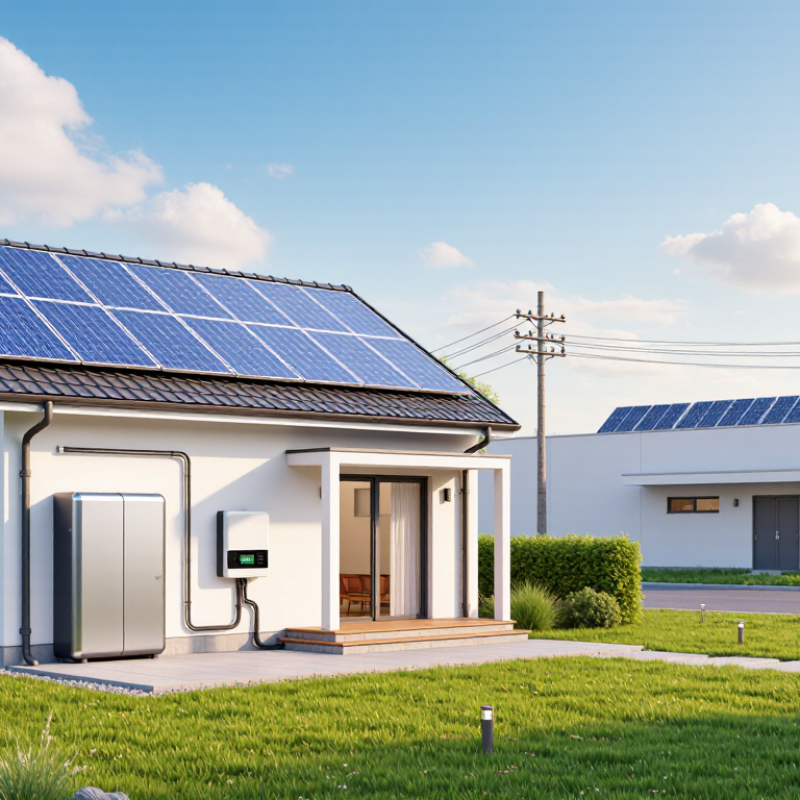
Solar and battery storage work best when their roles are clearly defined. A rooftop array may produce excess electricity at noon, while household demand rises after sunset. Storage shifts that energy into the evening, reduces grid purchases, and can provide limited backup during outages.
A widely cited 2023 battery-pack benchmark places the average price at 139 dollars per kWh. A 10 kWh pack therefore suggests about 1,390 dollars before installation. The first estimate is often wrong. Inverters, battery controls, wiring, safety equipment, labor, permits, and financing can substantially increase the final project cost. For a realistic evaluation, calculate the complete installed price, not only the cell or pack price.
Performance matters as much as price. A battery with 90% round-trip efficiency will return less energy than it stores. Degradation also reduces usable capacity over time. Measure daily solar surplus, evening consumption, peak demand, and expected cycling frequency before choosing a system size. An oversized battery may sit idle, while a small unit may fail during cloudy periods. That trade-off deserves attention. Real site conditions can be inconvenient. Shade, winter production, limited wall space, and local connection rules may change the design. I would test several load scenarios, including poor weather and an unexpected outage, before approving the investment.
Estimated battery-pack cost for a 1 MW solar-plus-storage system using the 2023 global lithium-ion battery-pack benchmark of $139/kWh. Longer-duration storage increases energy capacity and total pack cost while keeping the rated power at 1 MW.
Calculation: battery-pack cost = 1,000 kW × storage duration × $139/kWh. The estimates cover battery packs only and exclude solar modules, inverters, installation, land, financing, operation, and replacement costs. Benchmark reference: BloombergNEF, 2023 global lithium-ion battery-pack price benchmark.
AC coupling converts solar power before charging the battery. The battery converts power again for household use. DC coupling connects solar and storage on the direct-current side. Fewer conversions can improve efficiency, often reaching about 90–95%.
AC coupling suits homes with existing solar equipment. It can add storage without replacing the entire solar system. Repeated conversions may reduce round-trip efficiency to roughly 85–90%. The easier installation is not always the most efficient.
DC coupling can reduce conversion losses during midday charging. It may also capture solar energy limited by inverter capacity. A hybrid inverter manages charging and household supply. Controls are more complex. Poor sizing can erase the benefits.
Start with evening energy use, not panel capacity. A home using 8 kilowatts for three hours needs 24 kilowatt-hours. With 80% usable capacity, storage should hold at least 30 kilowatt-hours. Allow extra capacity for aging, temperature, and reserve power.
Two hours can cover short evening peaks and modest backup needs. Four hours offers stronger support during cloudy afternoons. Winter heating may empty the battery before midnight. The right duration depends on actual load patterns.
Review roof direction, shading, seasonal production, and inverter limits. Compare solar output with household demand at five-minute intervals. Annual averages can hide cold mornings and dark winter afternoons. Measured evidence is better.
Track solar production, battery charge levels, household demand, and conversion losses. Check performance during partial loads, not only ideal conditions. Review the system after several months of operation. Early assumptions are often wrong.
Use recognized grid-interconnection and fire-safety requirements during design. Verify voltage, frequency, shutdown, ventilation, detection, and protection settings. Keep aisles clear and labels visible. Test alarms and emergency circuits after installation. Documents alone are not enough.
Learning how to integrate energy storage with solar power begins with choosing the right system architecture. AC-coupled systems can simplify retrofits, while DC-coupled designs may reduce conversion losses and improve overall efficiency, typically reaching about 85–95% under suitable conditions. System sizing should match household or facility demand, with batteries commonly planned for two to four hours of storage and approximately 80% usable capacity to balance performance, lifespan, and cost.
Smart inverters and an energy management system can coordinate solar generation, battery charging, and grid interaction, helping reduce time-of-use costs and support approved grid services. Safe operation also requires careful attention to applicable interconnection, fire protection, and battery installation standards, including IEEE 1547 and NFPA 855 requirements. Finally, financial planning should account for equipment, installation, maintenance, and replacement expenses, using the 2023 battery-pack benchmark of about $139 per kWh as a reference point rather than a complete project cost.

PowerSTN Energy