PowerSTN Energy
1 / 5
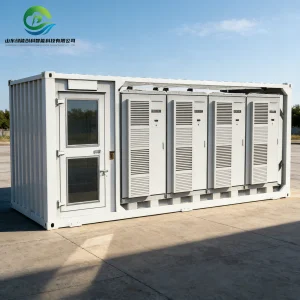
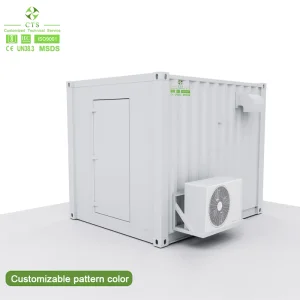
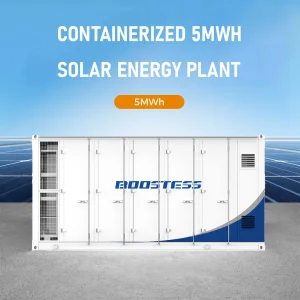
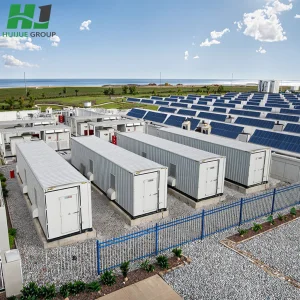
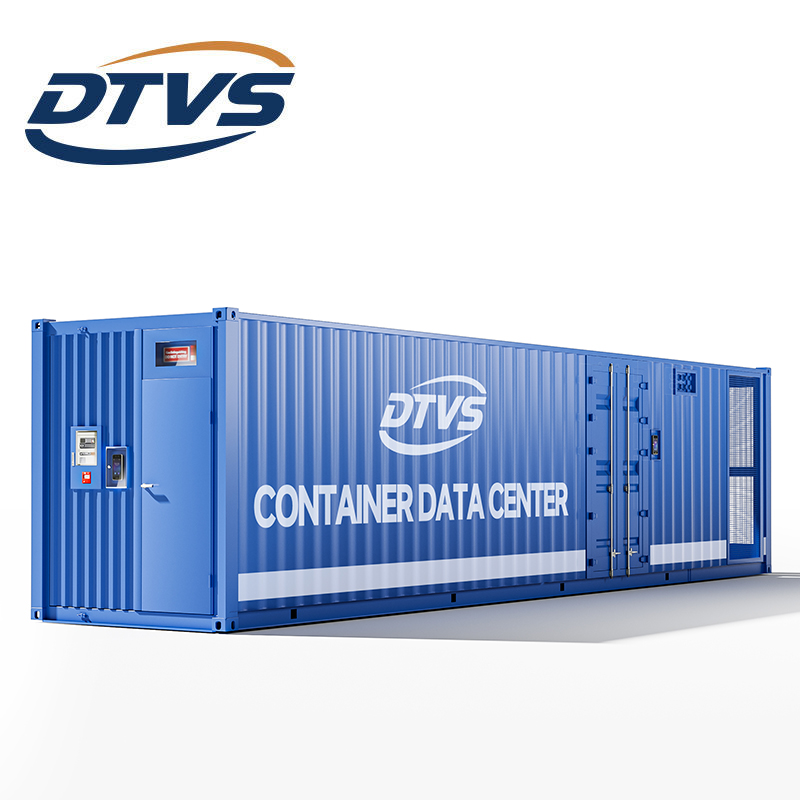
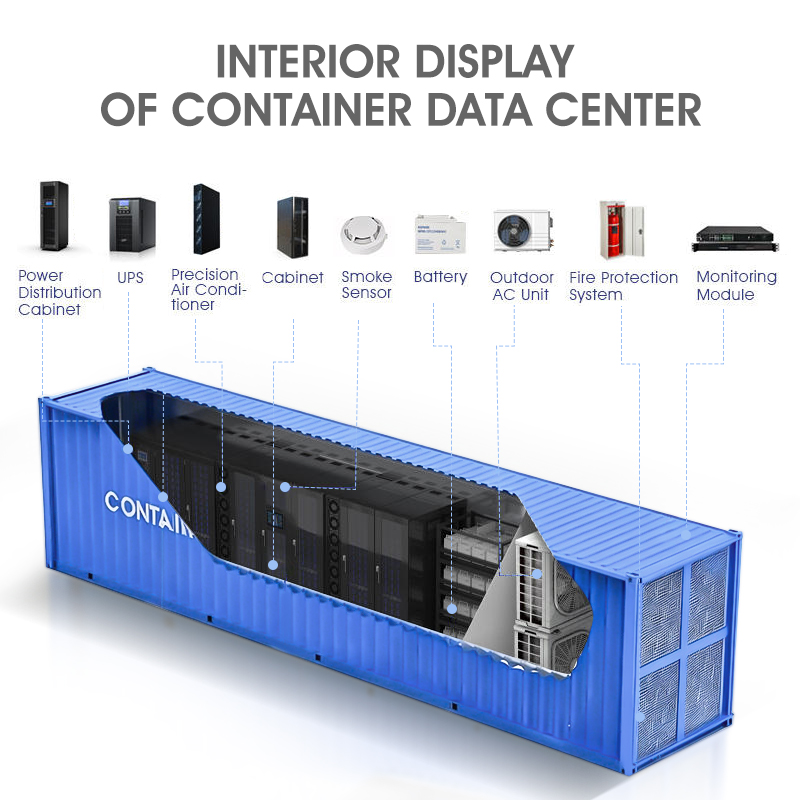
A containerized data center is a modular data center solution that uses standard containers (e.g., 20-foot and 40-foot international standard containers) as its carrier. Through factory prefabrication, it integrates IT equipment (servers, storage, and network devices), power systems, cooling systems, security systems, and other components into a single unit. It breaks the limitations of traditional data centers—such as on-site construction, long cycles, and poor flexibility—and boasts core advantages of high standardization, mobility, and rapid deployment. It serves as an efficient IT infrastructure for addressing temporary computing needs, edge scenarios, and special environments.
| Module Category | Core Equipment | Function |
|---|---|---|
| IT Equipment Module | Servers, storage arrays, switches, firewalls | Undertakes data computing, storage, network transmission, and security protection |
| Power Support Module | UPS (Uninterruptible Power Supply), battery banks, diesel generators (optional) | Ensures uninterrupted operation of IT equipment during power outages and adapts to different power supply environments |
| Cooling and Heat Dissipation Module | Power distribution systems / precision air conditioners (air-cooled / water-cooled), ventilation systems, hot aisle containment (optional) | Controls the temperature (usually 18~27℃) and humidity (40%~60%) inside the data center to prevent equipment overheating |
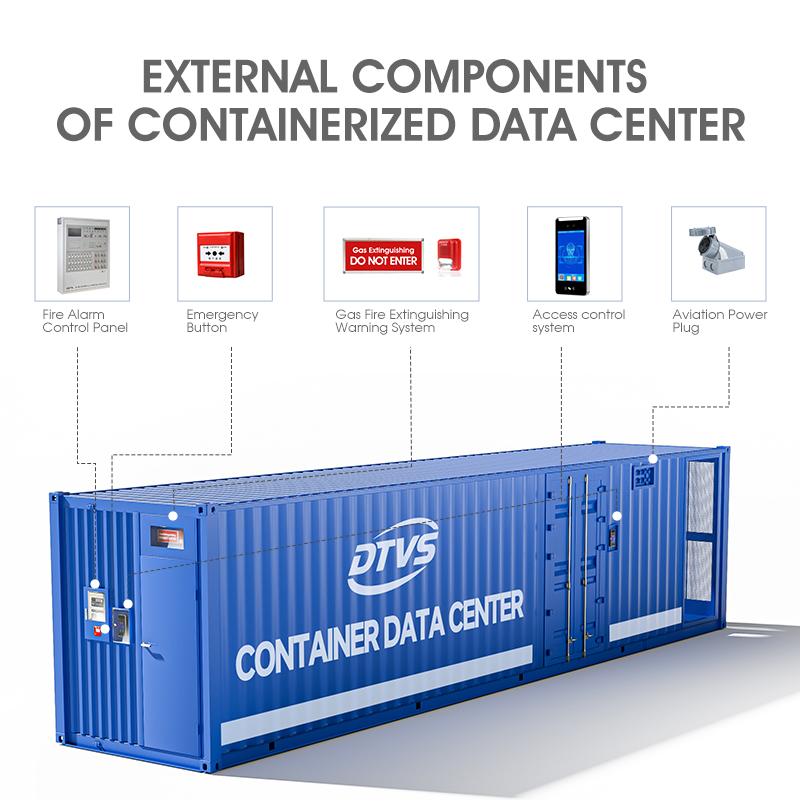
| Environment and Security Module | Temperature and humidity sensors, smoke detectors, access control systems, video surveillance, fire protection systems (e.g., gas fire suppression) | Monitors the data center environment in real time and prevents risks such as theft and fire |
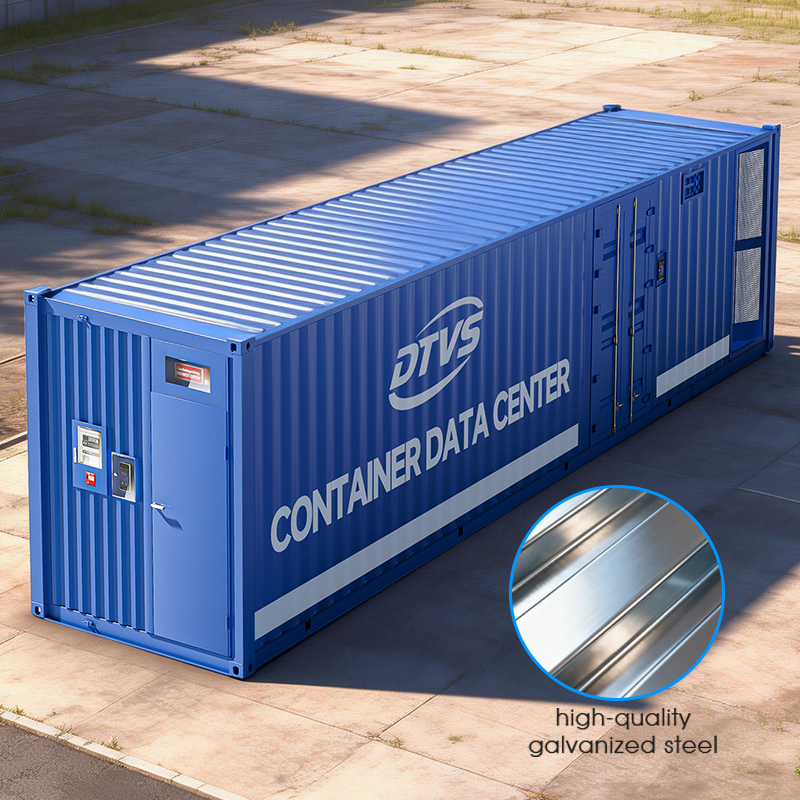
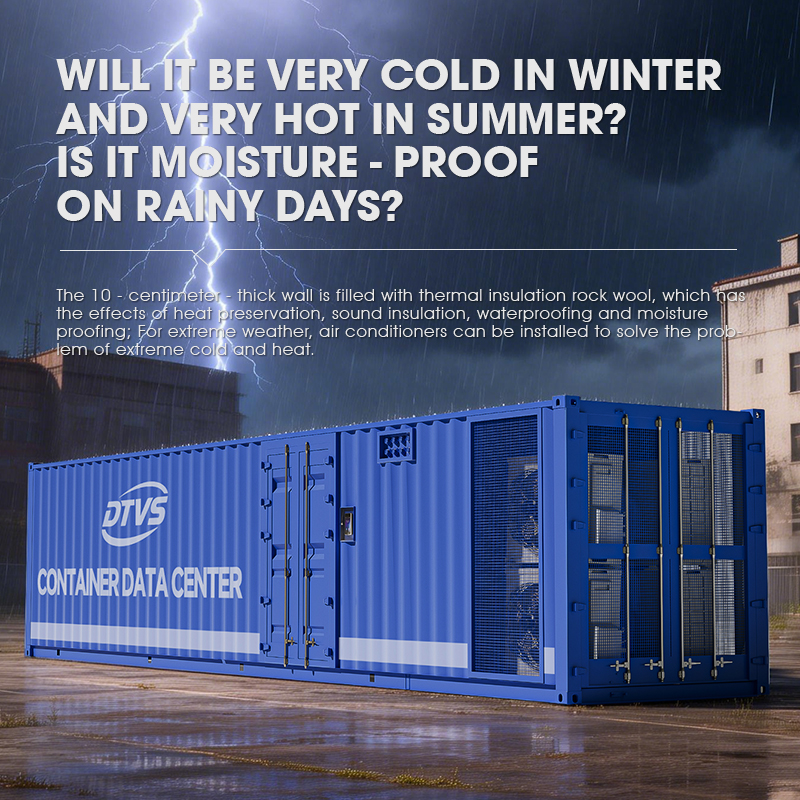
| Structure and Protection Module | Galvanized steel container body, thermal insulation layer, dustproof and waterproof shutters, grounding system | Provides physical protection, isolates from harsh external environments, and ensures equipment safety |